
The restaurant industry in Qatar is evolving as businesses look for new ways to improve customer experience, simplify operations, and present their menus professionally. From cafés and casual dining restaurants to luxury hotels and fine-dining establishments, restaurants are exploring digital solutions that make ordering information easier to access.
One important decision for restaurant owners is whether to continue using traditional printed menus or introduce NFC menu stands.
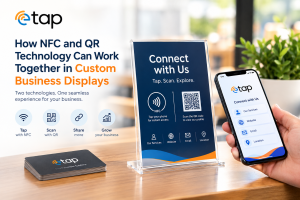
Printed menus remain familiar and easy to use, while NFC menu stands allow customers to access a digital menu by tapping a compatible smartphone against an NFC-enabled stand. Some solutions also include a QR code, giving customers another way to open the menu.
So, which option is better for Qatar restaurants?
The answer depends on your restaurant’s budget, menu update frequency, customer preferences, and service style. In this guide, we compare NFC menu stands and printed menus to help restaurant owners choose the right solution.
What Is an NFC Menu Stand?
An NFC menu stand is a physical display containing a Near Field Communication (NFC) chip programmed to open a restaurant’s digital menu link.
When a customer taps a compatible smartphone against the designated area, the phone can open the menu webpage. Depending on the product design, the stand may also include a QR code that customers can scan using their smartphone camera.
Instead of browsing a physical menu, customers can view menu items, descriptions, prices, and images on their devices.
Restaurants can explore ETAP’s Digital Menu NFC Stand with QR Code in Qatar to learn more about this type of contactless menu solution.
How Does an NFC Menu Stand Work?
The process is simple:
- The restaurant prepares a digital menu webpage.
- The NFC chip is configured with the menu link.
- The stand is placed on a restaurant table or counter.
- Customers tap their compatible smartphones or scan the QR code, if available.
- The digital menu opens in the phone’s browser.
Customers can then browse the menu without needing to download a dedicated restaurant app, provided the menu is accessible through a standard webpage.
What Are Traditional Printed Menus?
Printed menus are physical documents that display a restaurant’s available food, drinks, prices, and other information.
They may be printed on paper, laminated sheets, booklets, or premium materials depending on the restaurant’s branding and service style.
Printed menus remain popular because customers can browse the options without using a smartphone. They are particularly suitable for restaurants that prefer a traditional dining experience or want to provide menus for customers who do not wish to use digital devices.
However, printed menus generally need to be reprinted when prices, dishes, or other important details change.
NFC Menu Stands vs. Printed Menus: Key Differences
| Feature | NFC Menu Stands | Printed Menus |
|---|---|---|
| Menu access | Smartphone tap, with QR option if available | Physical menu handed to the customer |
| Menu updates | Update the linked digital menu | Reprint or replace affected menus |
| Printing requirements | Physical stand plus digital menu setup | Printed menu copies |
| Customer experience | Digital and contactless | Familiar, traditional browsing |
| Product presentation | Modern tabletop display | Depends on printing and material quality |
| Internet requirement | Usually required to load the online menu | Not required |
| Smartphone required | Yes, for the digital menu | No |
| Food photographs | Can display digital images and other media | Limited by printed layout |
| Best use | Restaurants wanting a convenient digital option | Restaurants preferring physical menus |
| Accessibility | Depends on device, webpage design, and customer needs | Available without a smartphone |
The main difference is flexibility: a digital menu can be updated online, while a printed menu offers an offline browsing experience that does not depend on a phone.
Benefits of NFC Menu Stands for Qatar Restaurants
1. Easier Menu Updates
Restaurant menus change for many reasons. Ingredient prices may increase, seasonal dishes may be introduced, or a restaurant may launch new promotions.
With a digital menu, the restaurant can update the linked webpage without automatically replacing the physical NFC stand. This can reduce the need for repeated menu printing, although the digital menu still needs to be maintained.
For restaurants in Doha and other parts of Qatar that frequently adjust their offerings, this flexibility can be valuable.
2. A Modern Dining Experience
Customers increasingly interact with digital services in everyday life. An NFC menu stand gives a restaurant a convenient way to connect its physical tables with online menu information.
A branded stand can also complement the restaurant’s interior and provide a consistent presentation across tables.
3. Access to Richer Menu Content
A digital menu can display more than dish names and prices. Depending on its design, it can include:
- Food photographs
- Dish descriptions
- Allergen information
- Dietary labels
- Multiple languages
- Daily specials
- Seasonal menu sections
- Links to ordering or reservation pages
Restaurants should ensure that ingredient, allergen, and dietary information is accurate and kept up to date.
4. Reduced Dependence on Reprinting
When a printed menu becomes outdated, a restaurant may need to replace some or all copies. Digital menus can make routine updates simpler, particularly when multiple tables link to the same menu webpage.
The stand itself may continue to be used as long as it remains in good condition and the linked technology works correctly.
5. NFC and QR Code Convenience
Not every customer uses NFC in the same way. Some customers may prefer scanning a QR code.
A menu stand that supports both methods provides an alternative way to access the menu. This can make the experience more flexible for different customers and devices.
6. Support for Multilingual Menus
Qatar welcomes residents and visitors from many linguistic backgrounds. A digital menu can provide language options without requiring a restaurant to print a separate physical menu for every language.
This is particularly useful for restaurants serving international customers, tourists, and diverse local communities.
Benefits of Printed Menus for Restaurants
Although digital menus offer flexibility, printed menus still have important advantages.
1. No Smartphone Required
Customers can open a printed menu and start reading immediately. They do not need a compatible phone, mobile data, Wi-Fi, or familiarity with NFC technology.
2. A Familiar Dining Experience
Some customers prefer physical menus, particularly in fine-dining establishments or restaurants where traditional hospitality is part of the experience.
A thoughtfully designed printed menu can complement the restaurant’s atmosphere.
3. Reliable Offline Access
Printed menus remain available if the restaurant’s internet connection is unavailable or a digital menu webpage temporarily stops working.
This makes them a useful backup even for restaurants that primarily use digital menus.
4. Tangible Branding Opportunities
Printed menus can feature premium paper, distinctive typography, photography, illustrations, and special finishes. These details can support the identity of a restaurant.
For some establishments, the physical menu is part of the overall dining experience rather than simply a list of dishes.
Which Option Is More Cost-Effective?
The total cost depends on the restaurant’s menu size, number of tables, printing frequency, digital setup, and ongoing maintenance.
Printed menus may have a lower initial cost for a small restaurant with a stable menu. However, frequent price changes or seasonal updates can increase printing expenses over time.
NFC menu stands require the initial purchase of the stands and setup of a digital menu. The restaurant may also have costs associated with website development, hosting, design, or menu management.
| Cost factor | NFC Menu Stands | Printed Menus |
|---|---|---|
| Initial setup | Stands and digital menu setup | Menu design and printing |
| Routine changes | Update digital content | Reprint affected menus or copies |
| Physical replacements | Replace damaged or lost stands | Replace damaged or outdated menus |
| Digital maintenance | Required for online menus | Not required |
| Best financial fit | Frequent updates or multiple locations may benefit | Stable menus and simpler requirements may favour print |
Restaurants should compare their actual costs rather than assuming that one option is always cheaper. The result depends on how often the menu changes and the resources needed to maintain each solution.
Which Solution Is Better for Different Restaurant Types in Qatar?
Cafés and Coffee Shops
NFC menu stands can work well in cafés that update drink options, seasonal specials, or promotions regularly. Printed menus may still be useful for customers who prefer a physical menu at the counter.
Fine-Dining Restaurants
Fine-dining restaurants may prefer premium printed menus to complement their service style. A digital menu can be offered as an additional option for customers who value convenience or need a particular language.
Food Courts and Quick-Service Restaurants
Digital menu access can be useful where customers want to review options quickly. NFC stands may be placed on tables or at suitable service points, while printed menus or menu boards can remain available.
Hotels and Resorts
Hotels can use digital menus to present restaurant offerings, room-service information, and updated specials. The digital content must be easy to access and clearly organised for guests.
Casual Dining Restaurants
Casual dining businesses may benefit from combining both options. NFC stands can offer convenient access to a digital menu, while printed menus remain available for customers who prefer them.
Best Practices for Introducing NFC Menu Stands
If you decide to introduce NFC menu stands, a few practical steps can help create a better experience.
Choose visible placement: Place the stand where customers can easily notice and reach it without interfering with table service.
Use a clear instruction: Add a simple message such as “Tap or Scan to View Our Menu.”
Keep the digital menu mobile-friendly: Text should be readable, prices clear, and navigation simple on smaller screens.
Test the link regularly: Confirm that the NFC chip and QR code, where included, open the correct webpage.
Keep menu information accurate: Update prices, availability, ingredients, and promotional details whenever necessary.
Provide an alternative: Keep printed menus or another accessible option available for customers who cannot or prefer not to use a smartphone.
Maintain hygiene: Clean physical stands regularly, particularly in busy dining environments.
Why Consider ETAP’s NFC Menu Stand in Qatar?
Restaurants looking to introduce digital menu access can explore the ETAP Digital Menu NFC Stand with QR Code.
This type of solution can help restaurants connect a physical tabletop display with a digital menu, allowing customers to access menu information through a compatible smartphone tap or QR code scan.
ETAP also provides QR Code and UV Printing solutions for businesses that need customised printed products and branded displays.
Before selecting a solution, restaurants should confirm the stand’s available features, dimensions, branding options, compatibility, and the setup required for the digital menu.
Final Verdict: NFC Menu Stands or Printed Menus?
NFC menu stands and printed menus both have a place in Qatar’s restaurant industry.
Choose NFC menu stands if you want a convenient digital menu, easier content updates, and the ability to present photographs, multilingual information, and other digital content.
Choose printed menus if your customers value physical browsing, you want offline access, or your menu changes infrequently.
For many restaurants, the most practical solution is a hybrid approach: use NFC menu stands for convenient digital access while keeping a few printed menus available for customers who prefer them.
The goal is not simply to adopt new technology. It is to make the dining experience easier, keep information accurate, and choose a menu format that fits your restaurant’s customers and operations.
Explore ETAP’s Digital Menu NFC Stand with QR Code in Qatar to learn more about contactless menu solutions for restaurants.
Frequently Asked Questions
1. What is an NFC menu stand?
An NFC menu stand is a physical display containing an NFC chip that directs compatible smartphones to a digital menu webpage when tapped. Some designs also include a QR code.
2. Are NFC menu stands suitable for restaurants in Qatar?
They can be suitable for cafés, restaurants, hotels, food courts, and other hospitality businesses that want to offer digital menu access.
3. Can a restaurant update its digital menu without replacing the NFC stand?
Usually, yes, if the stand links to a menu webpage that the restaurant can update. The physical stand does not need to be replaced for ordinary menu edits, provided the link and product remain functional.
4. Do customers need to install an app to use an NFC menu stand?
A standard NFC menu link can generally open in a smartphone browser without a dedicated app. Customers need a compatible device and internet access to load an online menu. A QR code can provide an alternative where available.
5. Are printed menus becoming obsolete?
No. Printed menus remain useful because they work offline, do not require a smartphone, and offer a familiar dining experience. The right choice depends on the restaurant and its customers.
6. Can restaurants use NFC and printed menus together?
Yes. Restaurants can use NFC stands for digital access while keeping printed menus available for customers who prefer physical copies or cannot access the digital menu.