
Healthcare professionals rely on clear, reliable communication when connecting with patients, colleagues, referral partners, and other medical professionals. Doctors and specialists regularly share clinic phone numbers, appointment details, professional profiles, and other contact information. Yet traditional paper business cards can become outdated, get misplaced, or require frequent reprinting when details change.
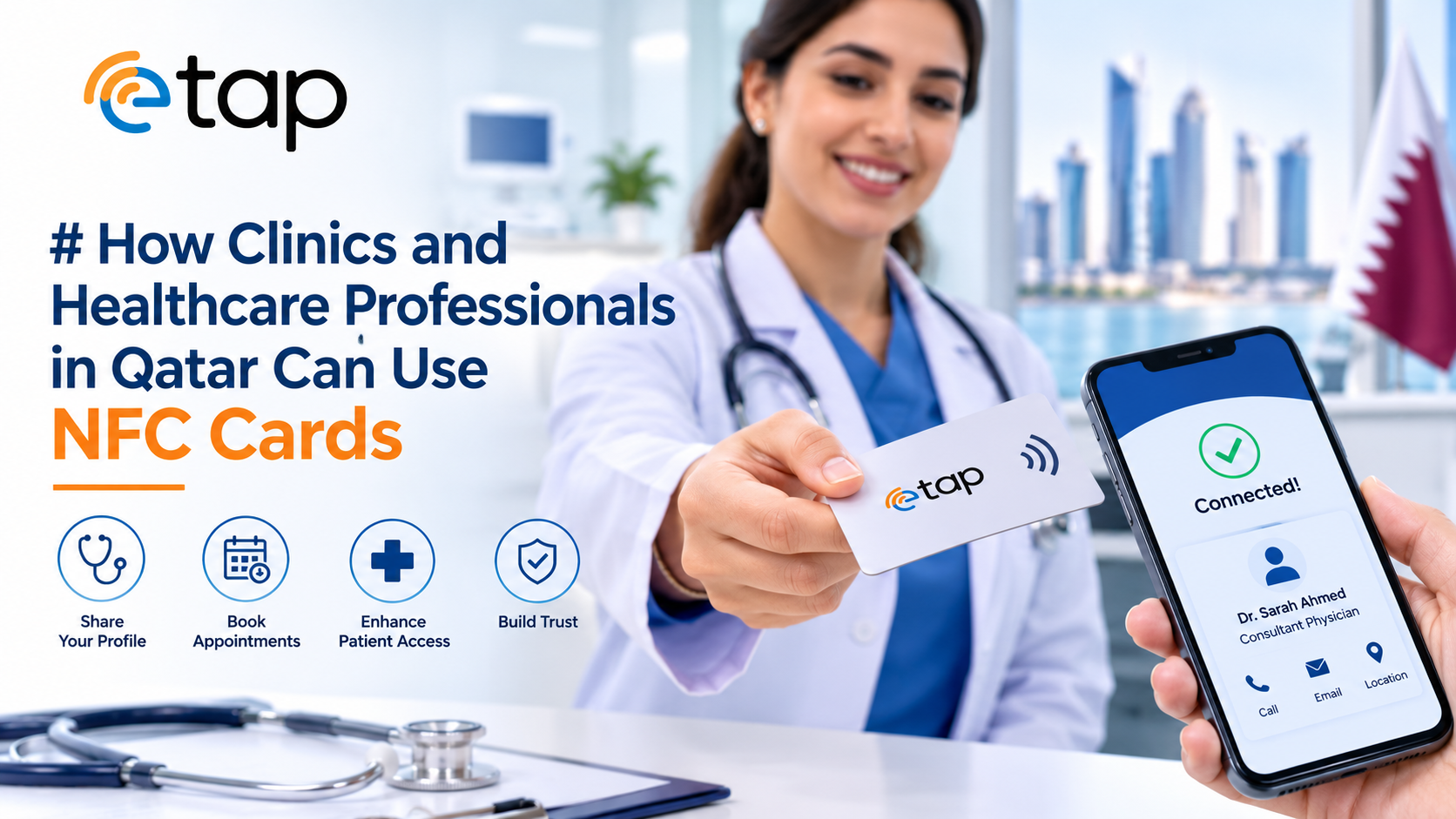
An NFC card for clinics in Qatar offers a convenient digital alternative. By tapping a compatible smartphone against the card, a patient or professional can open a digital profile containing the information the cardholder chooses to share, such as their name, medical speciality, clinic contact details, WhatsApp link, and appointment booking page.
NFC cards do not need to store patient records or confidential medical information. They can simply act as a bridge between a physical business card and a professional’s online contact profile.
For private clinics, hospitals, consultants, dentists, physiotherapists, and other healthcare professionals in Qatar, NFC cards can make professional networking and contact sharing easier.
Why Healthcare Professionals in Qatar May Need Digital Business Cards
Healthcare professionals meet different people throughout their working day. A doctor may introduce themselves to a new patient, exchange details with another specialist, attend a medical conference, or connect with a clinic administrator.
Traditional paper cards can help, but they have limitations:
- Outdated details: A change in clinic location, phone number, speciality, or appointment link may make existing cards inaccurate.
- Reprinting costs: Professionals may need new cards whenever their details or branding change.
- Limited information: A small paper card cannot conveniently display every relevant contact option.
- Manual saving: Recipients may need to type the phone number or email address into their contacts.
- Physical storage: Cards can be misplaced or discarded after an appointment or professional meeting.
A digital NFC business card offers another way to share the same professional information. If the card links to an editable online profile, the information on that profile can be updated without necessarily replacing the physical card.
What Is an NFC Card for Clinic?
An NFC card uses Near Field Communication technology to share a digital link with a compatible smartphone over a very short distance.
The healthcare professional taps the card near the phone’s NFC reading area. The phone can then open the linked digital profile in its browser. The recipient can view the details and save or use the available contact options.
A clinic NFC card can include:
- Doctor’s full name and professional designation
- Medical speciality or department
- Clinic or hospital name
- Professional phone number
- Clinic email address
- WhatsApp contact link
- Clinic location or map link
- Appointment booking webpage
- Professional website or profile
- Publicly shareable information about accepted insurance plans, where appropriate
The card should contain only information the professional or clinic intends to make publicly accessible. It is a contact-sharing tool, not a patient-management system.
Explore ETAP’s smart networking product category for digital networking card options.
How Doctors and Clinics Can Use NFC Cards
1. Sharing Contact Details with Patients
A doctor can offer an NFC card at the reception desk or during a professional introduction. Patients can tap their smartphones to open the doctor’s contact profile and access the clinic’s published contact details.
This can reduce the need to manually type a phone number or website address. Clinics should make sure the shared information is accurate and that patients understand which contact channel to use for routine enquiries versus urgent medical concerns.
2. Making Appointment Information Easier to Find
An NFC profile can include a link to the clinic’s appointment booking page, appointment enquiry form, or official contact number.
Patients can use the link to find the appropriate booking channel without searching online for the clinic. The card does not itself book appointments; it directs the recipient to the clinic’s chosen service.
3. Supporting Professional Referrals and Networking
Doctors frequently connect with other healthcare professionals, medical representatives, clinic managers, and referral partners.
At professional meetings and medical conferences, an NFC business card can provide a quick way to share a professional profile and contact information. This is useful when exchanging details with colleagues without carrying large quantities of printed cards.
4. Helping Specialists Present Their Professional Profiles
Consultants and specialists may work across different clinics or departments. A digital profile can help them present their speciality, professional contact details, clinic affiliations, and relevant public profile links in one place.
Any professional qualifications, credentials, or affiliations displayed should be accurate and appropriately authorised.
5. Sharing Clinic Location and Contact Channels
For clinics serving patients across Doha, Al Rayyan, Lusail, and other areas of Qatar, an NFC profile can include a map link, reception number, website, and WhatsApp contact option.
Patients can open the relevant information directly from their smartphones, making it easier to find the clinic’s official contact channels.
Privacy and Data Protection: What Should Clinics Know?
Privacy is especially important in healthcare. An NFC business card should be designed to share professional contact information, not confidential patient information.
An NFC card does not need to store patient names, medical histories, diagnoses, prescriptions, test results, or appointment records. It can simply contain a link to a public-facing professional profile.
Healthcare organisations in Qatar should also consider their obligations under Qatar’s Personal Data Privacy Protection Law No. 13 of 2016 and applicable healthcare requirements. The National Cyber Security Agency provides guidance on personal data privacy protection. See the official Qatar legislation and NCSA privacy guidance.
The US HIPAA framework is not automatically the governing privacy law for a clinic operating in Qatar. Clinics should follow the laws and regulatory requirements applicable to their operations and seek qualified advice where needed.
Practical privacy precautions include:
- Share only professional information intended for public access.
- Do not link an NFC card to patient records or private clinical systems.
- Avoid displaying personal staff contact details without permission.
- Use secure, authorised webpages for appointment enquiries.
- Review the digital profile regularly and remove outdated information.
- Do not include patient information in public review links or marketing material.
These precautions help keep a simple networking tool separate from sensitive healthcare information.
Can Clinics Use NFC Google Review Cards?
Clinics may also consider NFC-enabled Google Review Cards to make their public feedback page easier to access.
A patient or visitor can tap the card to open the clinic’s Google review page and decide whether to share feedback about their experience. A QR code can also be offered as an alternative access method.
However, healthcare providers should be particularly careful about patient confidentiality and review practices. Never ask patients to disclose diagnoses, treatment details, or other private health information in a public review. Do not pressure patients to leave feedback, selectively request positive reviews, or offer rewards in exchange for reviews.
Explore the ETAP NFC Google Review Card for a way to make a public review link accessible through a physical card.
NFC Cards for Clinics: Design Recommendations
A healthcare professional’s business card should look clear, professional, and trustworthy. A few design choices can make the card more useful.
Use a clean medical aesthetic: White, navy, light blue, and subtle accent colours can create a professional appearance. The design should match the clinic’s branding.
Include Arabic and English: A bilingual layout can help clinics communicate with Qatar’s diverse patient and professional communities. Keep both languages readable rather than overcrowding the card.
Prioritise essential information: The doctor’s name, speciality, clinic, and main contact option should be easy to identify.
Use a clear tap instruction: A simple message such as “Tap to Save Contact” helps recipients understand how to use the card.
Test before distribution: Check the NFC link on compatible smartphones and confirm that the profile opens correctly. Make sure the card’s destination is mobile-friendly.
Choose a suitable card material: PVC, metal, and other available finishes can be considered according to the clinic’s brand identity and intended use. The NFC functionality should be tested with the selected construction.
Explore ETAP’s RFID card solutions and smart networking products when considering card options.
Can NFC Cards Be Used at Al Rayyan Hospital or Other Healthcare Facilities?
An NFC business card can generally be used to share a professional’s public contact profile wherever the recipient has a compatible smartphone. It does not require the hospital to install a special NFC system simply for someone to open an ordinary web link.
However, this does not mean an NFC card is integrated with, approved by, or connected to Al Rayyan Hospital or any other hospital’s internal systems. Staff should follow their organisation’s policies before distributing cards or using them on hospital premises.
Why Choose ETAP for NFC Business Cards in Qatar?
ETAP provides smart networking and NFC product solutions for businesses and professionals looking to connect physical cards with digital information.
Healthcare professionals can explore options for sharing professional contact details, clinic information, and other public-facing links through an NFC-enabled card.
For clinic or bulk requirements, contact ETAP to discuss card materials, branding, digital profile setup, and available quantities.
WhatsApp ETAP: +974 55769142
Website: https://etap.qa/
Whether you are an independent consultant, a specialist, or part of a healthcare organisation, a professionally designed NFC card can offer a practical alternative to repeatedly distributing paper contact details.
Frequently Asked Questions
1. What is an NFC card for a clinic in Qatar?
It is a digital business card that uses Near Field Communication to open a healthcare professional’s online contact profile when tapped with a compatible smartphone. The profile can include the doctor’s speciality, clinic contact details, WhatsApp link, and appointment page.
2. Do patients need to install an app to use an NFC card?
Usually, no. When the NFC card is configured with a standard webpage link, a compatible smartphone can open the profile in its browser. The phone must support NFC, and internet access is generally needed to load the page.
3. Can I use an NFC card at Al Rayyan Hospital?
An NFC card can share a public professional profile wherever a recipient can use a compatible smartphone. It is not automatically integrated with a hospital’s internal systems. Follow the hospital’s rules before distributing or using cards on its premises.
4. Can an NFC card include a doctor’s speciality and appointment link?
Yes. A digital profile can include a doctor’s name, speciality, clinic details, contact channels, and a link to an official appointment booking page, provided the information is authorised for public sharing.
5. Is patient data stored on an NFC business card?
It does not need to be. For professional networking, the card should share only approved public contact information. Patient records and confidential medical information should not be placed on a public NFC profile.
6. What is the price of 50 NFC cards for a clinic in Qatar?
The price depends on the card material, finish, design, branding, NFC configuration, and quantity. Contact ETAP on WhatsApp at +974 55769142 to request a quotation for 50 cards or another bulk requirement.
7. Can clinics use NFC cards to collect Google reviews?
Clinics can use an NFC review card to direct visitors to their public Google review page. Feedback must remain voluntary and genuine. Clinics should not offer incentives, pressure patients, selectively request positive reviews, or encourage patients to disclose private medical details.